Locks, Releases and magnets
|
|
Rim Locks |
|
|
|
|
|
 |
|
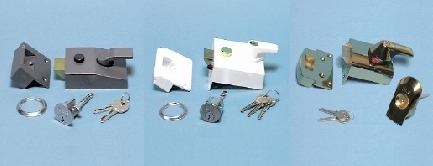
We can
supply and fit a variety of Yale
size="3"> and Union rim
locks in a range of finishes, or replace the cylinder of an existing lock. |
|
|
|
|
Mortice Locks |
|
|
|
|
|
 |
|
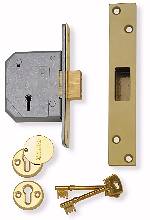
The Chubb 3G114 is a fairly typical
example of a 5 lever mortice deadlock that we would fit to a wooden front door |
|
|
|
|
Door Closers |
|
|
|
|
|
  |
|
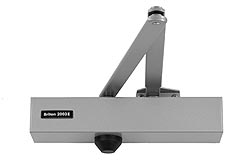
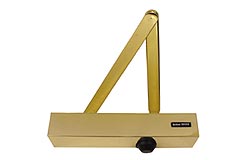
Briton
2003 door closers are available in brass and grey
finishes, they give reliable closing for most standard size doors. Other models
are available for heavier weight doors. |
|
|
|
|
Lock Releases |
|
|
|
|
|
 |
|
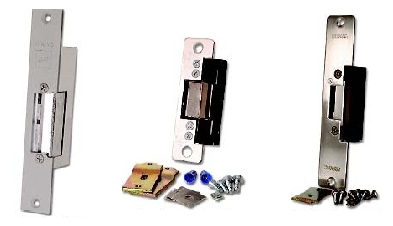
Lock
releases allow doors to be remotely unlocked via door
phone and access control equipment, the standard release shown is available in a
mortice or rim style. The Adams Rite and Trimec
units are usually fitted into aluminium framed doors, but fittings for wooden
doors are also available.< |
|
|
|
|
Cisa Locks |
|
|
|
|
|
  |
|
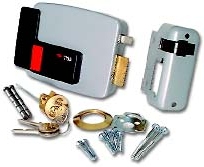
Cisa
electronic locks offer a more secure alternative to standard
releases for door entry systems, however often they will not open without the
addition of a secondary power supply or local switching relay (due to a lack of
power over long handset runs) A decent door closer is also needed, to ensure
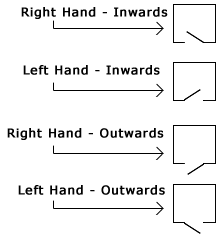
auto closing. Particular attention must be paid to the correct handing when
ordering. We have never found the outward opening configuration very successful. |
|
|
|
|
Magnets |
|
|
|
|
|
 |
|
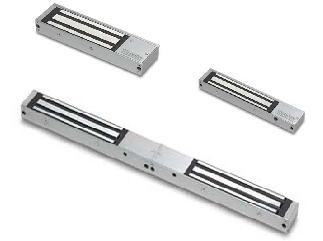
Magnets are now quite common for locking doors, generally fitted to the
head of the door (providing there is clearance) the armature is then fixed to
the door itself with a bolt. They will operate on inward and outward opening
doors. You will need a exit button and break glass unit on the inside to provide
a means of exit and to comply with fire regs, and a back up battery to ensure
the door remains locked in a power failure, it is also worth having a over ride
switch externally. As the magnet is fitted at the top of the door, they are not
suitable for weak or flexible doors (upvc etc) |
|
|
|
|
Shear Magnets |
|
|
|
|
|
 |
|
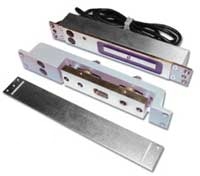
We do not
recommend use of these locking devices, as they do not provide a reliable
locking solution, often fitted to double glazed doors the units can be concealed
in the head of the door, providing a invisible means of holding the door shut
(that's the theory anyway !) |
|
|
|